The different types of kitchen knives and their uses
by Karine Lemoine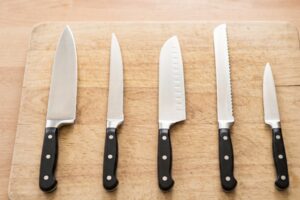
Chef knife, bread knife, boning knife... each kitchen knife is designed for a specific task. Using the right tool at the right time means cutting easier, cleaner, and above all safer.
If you're not yet sure where to start, ourGuide to choosing the right knifewill help you make the first purchase. Now here's what each type of knife is used for.
Sommaire
We review the most useful knives in the kitchen, from the most universal to the most specialized.
The chef's knife: the universal knife
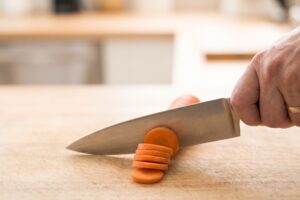
With a blade that is generally wide and slightly curved, a chef's knife allows you to cut, slice, mince and even crush (the flat blade can flatten a clove of garlic).It is the first knife to own, capable of managing 80% of common kitchen tasks.
The paring knife: precision
Smaller and lighter than a chef's knife, the paring knife (or peeler knife) is used for fine tasks: peeling a fruit, removing the eyes from a potato, carving a shallot, or any precision gesture where the chef's knife is too big.
The bread knife: the serrated blade
Its serrated blade allows you to slice a crispy crust without crushing it, unlike a smooth blade that would tend to compress the crumb before cutting.Also useful for cutting tomatoes or fruits with thin skin without crushing them.
The boning knife and the filleting knife
The boning knife has a thin, rigid blade, designed to follow the bones of a piece of meat. The filleting knife, which is more flexible, follows the contours of a fish to remove the flesh cleanly.
These knives are often very sharp and the thin blade offers less control than a chef's knife.: be extra careful when using them, following the good practices of oursafe cutting guide.
The carving knife (sharp)
With its long and thin blade, the slicer is used to cut thin regular slices in cooked meat (roast, leg, poultry), without tearing the fibers. A chef's knife can help out, but a slicer offers much sharper slices.
Our tips for using each knife well
►Start with a chef's knife
If you only have to buy one, this is it: it covers most of the daily needs.
►Never use a bread knife to slice meat
The serrated blade tears the fibers instead of slicing them clean: the result is much less clean than with a suitable carving knife.
►Add a paring knife before a complete set
It is often the second most used knife after the chef's knife, for all precision tasks.
In short, you don't become more efficient by accumulating knives, but by choosing the right tool for the task at hand.
Do not hesitate to leave a comment!
For more information and to receive our news, follow us on social networks!
Comments on The different types of kitchen knives and their uses