How to sharpen and maintain a kitchen knife
by Karine Lemoine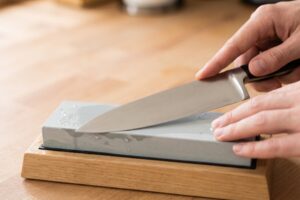
A knife that no longer cuts well is not only painful to use: it is also more dangerous than a sharp knife, because you are tempted to force and the knife can then slip. However, sharpening a knife is still a gesture that many avoid, often for lack of reference points.
Whatever theKnife selected, regular maintenance makes all the difference over time.
Sommaire
We take stock of the different sharpening methods, the ideal frequency, and the right cleaning and storage actions.
Sharpening stone, gun or electric sharpener?
The whetstoneis the most accurate method: it removes a bit of metal to recreate a clean edge. It requires some practice to maintain a constant angle (generally between 15° and 20° depending on the knife), but gives the best result over time.
The sharpener(the metal rod) removes almost no metal: it realigns the wire of the blade, which deforms slightly with use.It is a quick maintenance gesture between two real sharpenings, not a replacement of the stone.
The electric sharpeneris the easiest to use, but generally removes more metal than a stone used by hand: practical for occasional use, less recommended for a quality knife that you want to keep for a long time.
How often should you sharpen your knife?
For classic home use,A stone trip every 1 to 3 monthsis usually sufficient, supplemented by a gunshot before each slightly intensive cutting session.
A good simple guide: if the knife crushes a tomato or a piece of paper instead of slicing it clean, it's time to sharpen it.
Cleaning: never in the dishwasher
Kitchen knives, including those advertised as “dishwasher-safe”, are damaged more quickly in the dishwasher: heat, aggressive products and impacts against other utensils dull the blade and can damage the handle (especially wooden).
The right move is simple:Hand wash in hot soapy water and dry immediately, especially for a carbon steel knife that rusts quickly in contact with moisture.
Storage: avoid the bulk drawer
Store loose knives in a drawer, blade against blade or other utensils, blunt the edge each time you open and close, without you even noticing it.
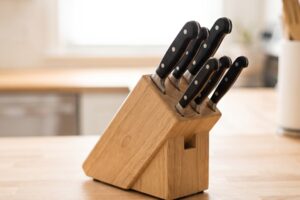
Oneknife block, a magnetic wall tape, or a simple blade guardavoid this unnecessary friction, while reducing the risk of being cut while rummaging in the drawer.
Our tips for daily maintenance
►Dry the knife immediately after washing
Never let it soak or air dry, especially if it's made of carbon steel.
►Test the sharpness on a piece of paper
A sharp knife slices through a sheet of paper held vertically without snagging or tearing it.
►Always keep a stable cutting board
A sliding board damages the edge with each cut and also increases the risk of accidents (see oursafe cutting guide).
In summary, good regular maintenance often counts more than the purchase price of the knife: a few minutes every month is enough to keep a clean and secure edge.
Do not hesitate to leave a comment!
For more information and to receive our news, follow us on social networks!
Comments on How to sharpen and maintain a kitchen knife