How do you know to throw away a nonstick skillet?
by Karine Lemoine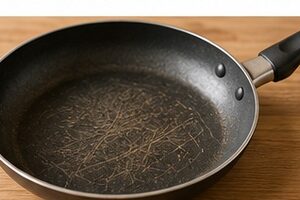
A non-stick frying pan that starts to stick a bit does not necessarily need to be replaced immediately. But some signs of wear and tear deserve to be taken seriously, beyond simple discomfort in the kitchen.
Between what is aesthetic and what is becoming a real security issue, the difference is not always easy to make.
Table of Contents
Here are the signs of wear to look out for, the signs that should prompt you to change the stove, and a few things to do to extend the life of the coating.
Signs of wear and tear to look out for
- Deep and numerous scratches on the upholstery
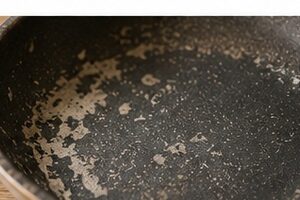
- Coating that peels or peels off in small pieces
- Foods that stick consistently, even with fat
- Marked discoloration or a dull, irregular appearance
- Deformed bottom of the pan, which no longer lies flat
- Handle that loosens or becomes unstable
A slight loss of anti-stick effectiveness over time is normal and does not present a danger in itself. It is especially the chipping and the deformed bottom that should alert.
When does this become a real safety issue?
As soon as the coating is visibly peeling, with pieces coming off in the food, it's time to change the pan.Occasionally ingesting small fragments of coating is not considered to be acute or immediately dangerous to health according to the available data, but it is neither desirable nor necessary to continue using it in this condition.
A deformed pan is also a practical and safety issue: it heats up unevenly, creates hot spots that can burn food locally, and can become unstable on the stovetop.
This is mainly about aesthetics
Progressive discoloration, a few marks left by a spatula, or a loss of shine do not call into question the safety of using a frying pan. These are normal signs of use, especially if the pan is regularly put in the dishwasher or used on a high heat.
Likewise, an occasional slight snag does not mean that the coating is compromised: it is above all its recurrence and extent that count.
Our tips
►Use the right utensils
Wood, silicone or rigid plastic damage the coating much less than metal. Avoiding metal utensils significantly extends the life of a non-stick pan.
►Avoid thermal shock
Passing a hot pan directly under cold water can weaken the coating and accelerate its wear. Let it cool down a bit before washing.
►Wash it by hand instead of in the dishwasher
Strong detergents and dishwasher heat accelerate the degradation of the non-stick coating. Gentle hand washing with a non-abrasive sponge keeps it longer.
A non-stick frying pan that chips or deforms no longer has a place in the kitchen: it is better to replace it rather than continue to deal with a damaged coating.
You can also read:How do you season a nonstick skilletandWhether old aluminum frying pans are safe.
Do not hesitate to leave a comment!
For more information and to receive our news, follow us on social networks!
Comments on How do you know to throw away a nonstick skillet?