Everything you need to know about eggs
by Karine Lemoine
The egg is an ingredient that is difficult to do without in the kitchen. It is often present in most of our recipes, easy to cook, inexpensive and rich in nutrients.
It must be said that, on the nutritional side, you can check many boxes!
Eggs contain almost all of the vitamins And all the Minerals that you need for good health.
Know that they provide almost half of your daily vitamin D needs.
Eggs are a great food, very versatile, and can be prepared in a variety of ways.
The eggs that we are used to eatingcome mainly from hens. Even if there are other alternatives such as quail, duck or ostrich eggs.
We also consume Fish eggs such as lumpfish eggs or caviar, but they are consumed differently than poultry eggs.
Some go away for its yellow liquid inside the egg that contains cholesterol.
An egg contains about 225 milligrams of cholesterol. Cholesterol isn't necessarily bad for your health, but if you have too much cholesterol in your diet, it can clog your arteries and increase your risk of heart disease.
What does the difference in egg color mean?
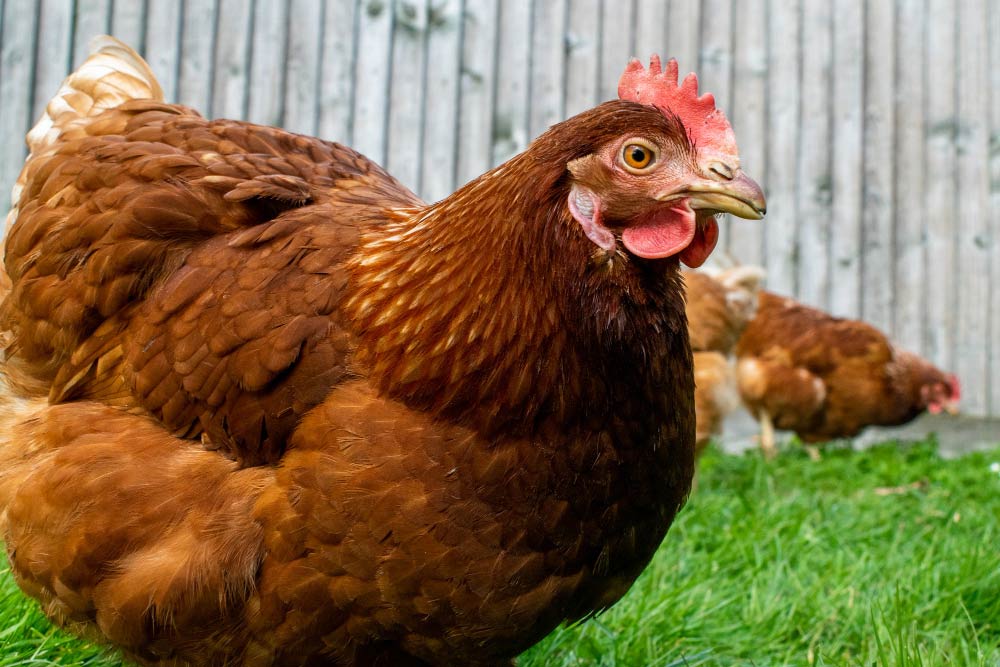 When you look more closely, you can see color contrasts depending on the egg that we buy. The color difference can appear on the shell but also on the inside in terms of the egg yolk.
These color differences are due to several reasons:
►The darker the eggshell, the older the hen that laid your egg is. Conversely, an egg that is less marked in color may mean that the hen is young.
►Depending on the variety of hens, you will have more or less dark eggshells. Marans' hens, with brown plumage, for example, will produce brown to dark colored eggs.
You will also find white eggs in stores, The white color of the shells is also linked to the color of the white plumage of the hens.
►Free-range hens lay dark yolk eggs, while hens raised in cages lay light-yellow eggs.
Moreover, the earlobe of chickens is an indicator to determine whether hens are raised in freedom or in cages.
The nutritional value of eggs remains the same whether they are laid by hens raised in the open air or in cages or whether the hens are brown or white.
Should you buy organic eggs?
If you are lucky enough to have a chicken coop and hens that lay eggs regularly in a healthy and natural environment, the question does not arise as to the origin of your eggs.
 Most people think that buying organic eggs is expensive. In fact, you can find organic eggs in grocery stores for around €2.40 per half-dozen.
There is indeed a price difference between non-organic eggs and organic ones, however the difference is relative.
Whether purchased individually or by the dozen, The egg is still really an inexpensive and affordable superfood if you reduce it to the unit price.
You will gain every advantage by eating organic eggs raised systematically in the open.
By eating organic eggs, you are eating a food certified free of antibiotics or animal meal.
This is important because it has a big impact on the quality of the egg. Attention, check the packaging of organic eggs carefully, which must include the certified organic label.
So eggs are better, healthier, and safer to eat when they're organic. But what about the numberings used to categorize the various commercial eggs?
What do the numbers on the eggs mean?
 All egg products must be accompanied by a Expiry date.
When you buy your eggs, check the dates carefully and do not hesitate to postpone the expiration date on the eggshell if you remove them from the package.
Most often, the date is already written on the egg.
Each egg sold in France is marked with a code, for example: 0 FR ABT01.
- The first number (between 0 and 3) indicates How was the hen that laid the egg raised.
- The next two letters indicate The country of production (here FR for France).
- The latest numbers indicate The producer specific. Let's take a closer look at the meaning of the first number.
The number 0:90%of the food consumed by the hen that laid this egg is organic (no chemicals or pesticides were used).
The hen was raised in the open, that is, she pecked in an outdoor area of 4 m2 per hen.
There is an indoor shelter where the hen sleeps and lays eggs, but the number of hens living in the indoor space is limited.
The box is marked “AB”, indicating that it is a completely organic product.
The number 1:The egg was laid by a Hen raised in the open in a space of at least 4 m2 per hen.
The number 2:The egg was laid by a Hens raised on the ground in a closed environment.There is a limit of 9 hens per m2 for eggs to be marked “2".
The number 3:The egg was laid by a Caged chicken living inside. There can be up to 18 hens per m2.
Eggs marked “0" are considered to be of the highest quality and are priced accordingly.
The eggs are labeled on the package according to their size, from small (under 53 grams) to XL (over 73 grams).
Should you choose the term “fresh” or “extra-fresh” eggs?
The term “fresh” or “extra-fresh” affects the quality of the egg.
An egg called “extra-fresh” is an egg that lasts a maximum of 9 days after laying. Between 9 and 28 days, the egg will be marked “fresh”.
However, There is absolutely no risk of making mayonnaise with “fresh” eggs.
If you eat them raw, choose “extra-fresh” instead.
Is raw egg dangerous?
 Yes and no. Raw eggs are safe to eat, but they nevertheless involve risks.
For example, raw eggs can cause salmonella poisoning if eaten without being washed properly.
Avoid eating raw eggs that have been stored in the refrigerator.
It is also important to remember that raw eggs should not be consumed by young children under 12 months of age or by pregnant women.
Raw eggs contain natural enzymes that help the body digest food.
If you are used to eating raw eggs, choose “extra-fresh” eggs.
That said, it's good to know that Cooking an egg has no impact on nutritional qualities.
The egg can be cooked in a variety of ways and The best way to cook is soft-boiled eggs or soft-boiled eggs for reasons of digestibility.
A more cooked white of water will be more digestible Unlike egg yolk, which will be more digestible, less cooked.
How do you store eggs?
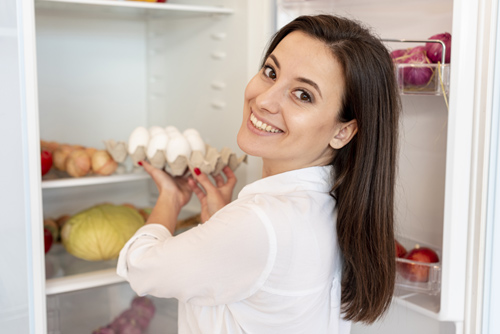 You may have read that eggs should be stored at a temperature of 4°C and often in the fridge, we have a place provided for this purpose for eggs.
Well, the temperature does not affect the quality of the egg, so you canKeep them well at room temperature.
We recommend that you store eggs at room temperature to avoid the temperature difference when you take them out of the fridge that can alter the egg and create a reaction.
Even if it is not very interesting, hard-boiled eggs can also be frozen for a short period of time (you will first have to remove the shell and place your eggs in a suitable container).
It will be necessary to mix them first or to separate the yolk from the white.
When you are ready to use the eggs, take them out and let them rest in the fridge before using them to avoid very big temperature differences.
Go and cook an egg... Yes but how?
Eggs are the most nutritious part of our diet and are very satiating. The proteins, albumin, it contains are excellent for our body. Learn more about how to prepare it will allow you to vary the pleasures on your plate.
If you want to enjoy a homemade egg recipe for breakfast, discover the different ways in which eggs are cooked.
You can also use eggs to create amazing desserts like meringues, omelettes or floating islands. These are just a few of the many ways eggs can be used.
-
How to Cook an Egg: Hard Boiled Egg
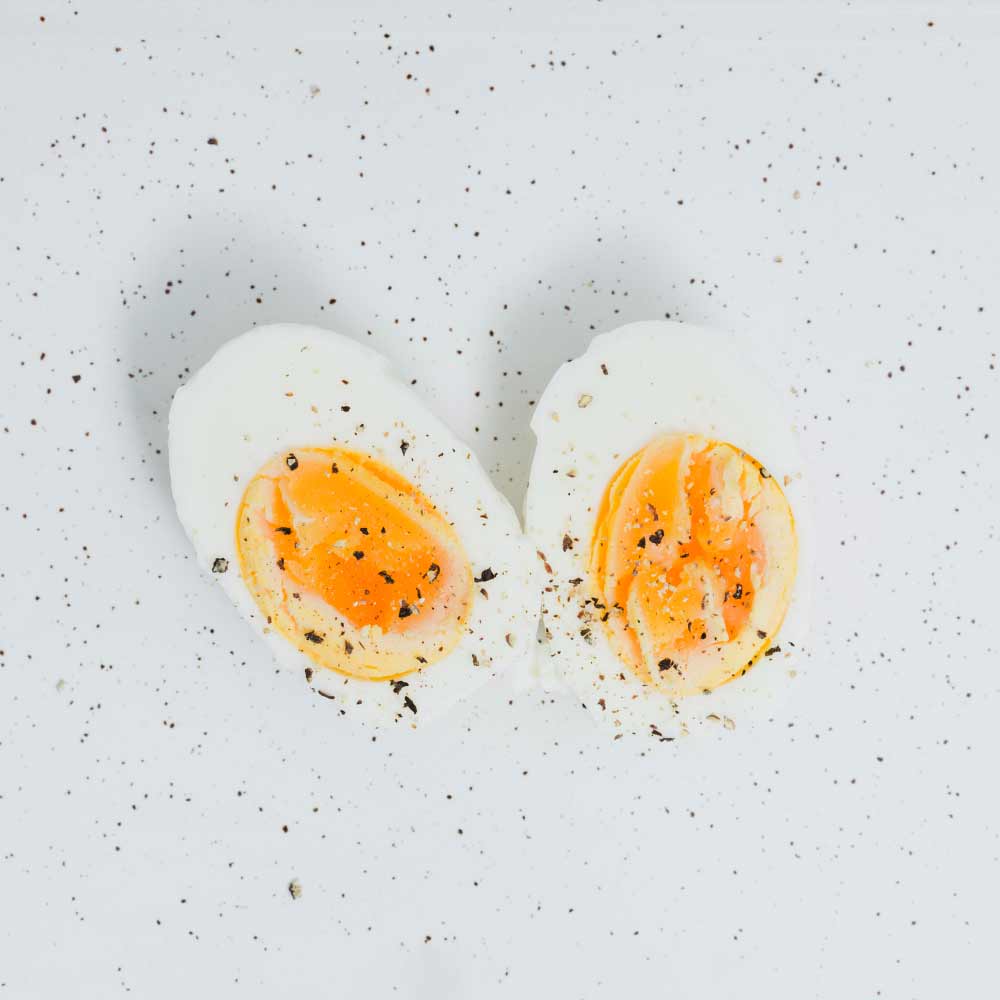
- The easiest way to boil an egg is to Place in a saucepan with enough water to cover it by about 2 cm.
- Wear theBoiling water to high heat, then reduce the heat to bring the water to a simmer.
- Carefully place the egg into the simmering water.
- Cover the pot tightly, Turn off the heat and leave the pot covered for 10 minutes.
- Drain the egg into a colander placed in a sink filled with cold running water, then rinse thoroughly with cold water.
- Enjoy the plain egg as it is or make our recipe forMimosa eggs.
The little trick: Be sure to respect the cooking time and do not hesitate to cool them to stop cooking once removed from the heat. The white will be fluffier.
-
How do you scramble an egg
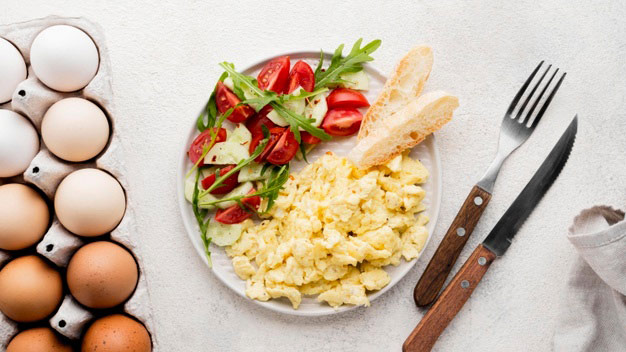
- Place a pot over medium heat. Break three eggs into the cold pot with a dab of butter, salt and pepper.
- With a spatula, Make gentle circular movements on the surface of the eggs, lifting them slightly so that the uncooked parts slide underneath. A little bit of crème fraîche to make it smooth and after 2 or 3 minutes, it's ready!
The aim is to cook the eggs just enough so that the whites are solid and the yolks are runny.
Season with salt and pepper to taste; sprinkle cheese or herbs on top and serve immediately.
You have other variants: you can add truffles, morels, sun-dried tomatoes, ham or some asparagus. These scrambled eggs will be ideal for a Family brunch!
-
How to fry an egg: Fried eggs
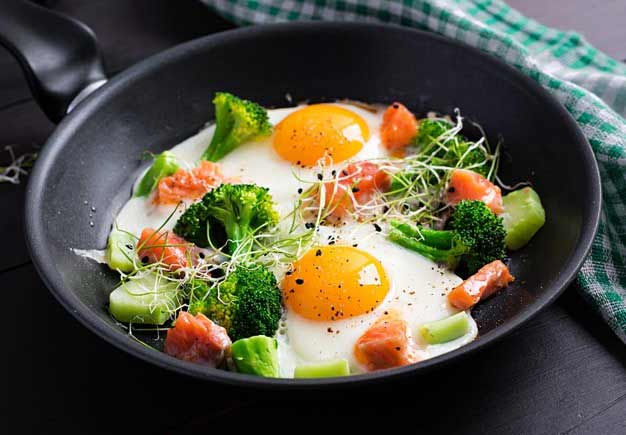 Place a non-stick skillet On your high heat, add a drizzle of olive oil when the pan is still cold then pour in your eggs. You wait for it to start sizzling.
- Lower the heat to low then wait a few seconds for the white to start setting.
- There are 2 options:Either you prefer liquid yolk or you make the yolks pop then you gently turn the fried eggs over with a spatula to finish cooking them on both sides.
- Served with toast and bacon, it's a simple treat that delights us!
-
How to poach an egg
- Fill a small pot halfway full of water. Bring water to a boil over high heat, then reduce the heat to medium and add a few drops of white vinegar or apple cider.
- Stir the water with a whisk in order to create a swirl then Slowly pour in your egg broken into a bowl beforehand.
- It takes about 3 minutes for the egg to be cooked. Carefully remove the egg with a spatula.
- All you have to do is make a Hollande sauce to enjoy delicious eggs benedict!
-
How to make a soft-boiled egg
The soft-boiled egg is An egg that can be eaten almost raw and placed in an egg cup. He asks 3 minutes of cooking time once the water is simmering. It goes perfectly with soups.
All it takes is a few pieces of bread cut into sticks to dip it into your hard-boiled egg and it's guaranteed fun! It is the most ideal cooking method with soft-boiled egg for better digestibility.
-
How to cook a soft-boiled egg
The soft-boiled egg consists of Get an egg white cooked enough to be peeled while keeping the soft yolk part. In my opinion, it is the most delicate cooking method to make that requires a bit of practice.
You have to count just about4 minutes of cooking after boiling. It will go perfectly with a mixed salad.
Eggs in pastry
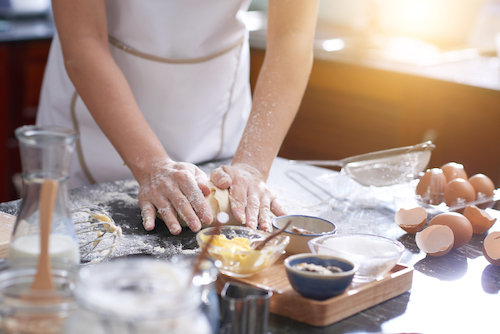 Eggs are generally used everywhere in baking. They can be Whisk in creams, serve to make shortcrust pastry pasta or added to pizzaduring cooking.
Eggs provide texture and binding power, as well as a rising power. Egg whites are often beaten until stiff peaks form when mixed with other ingredients. You can make fabulous chocolate mousses with egg white.
The egg yolk is usually cooked separately from the white, which allows it to remain soft while the white sets.
When mixed with sugar or other liquid, egg white thickens, whereas if left alone, it freezes.
This property makes them useful for sauces (such as Hollande sauce) that should not curdle.
In baking, eggs are used to Link the mixtures together and make the cakes rise.
Egg albumin contains most proteins, which give eggs their coagulating properties.
It also contains a certain amount of fat.
Egg brushed on brioche, for example, is also used to add color.
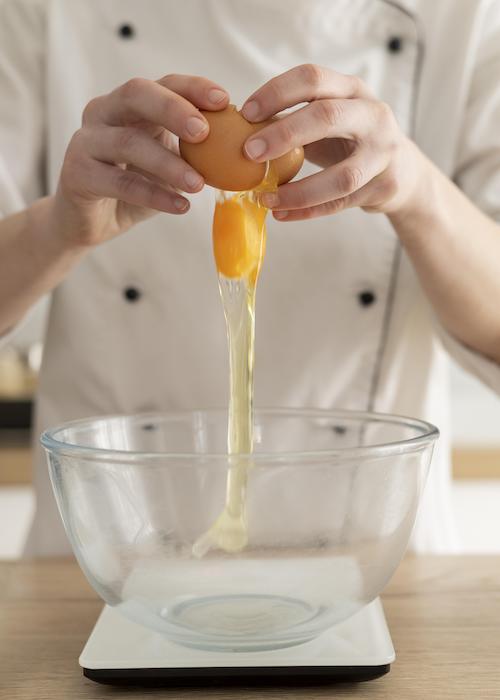
The little trick: The best way to break eggs is to Break them on a flat surface. Avoid breaking eggs on the edge of your dish if you no longer want to have pieces of shells in your preparations.
How can you tell if an egg is still good?
- Saltwater can help you test the freshness of an egg.
Place your egg in a salad bowl filled withwaterSalty cold (6g of salt for 300g of water)
- If the egg stays at the bottom of the container, it means that it is fresh.
- If the egg is placed in an upright position, it means that the egg is no longer perfectly fresh but that it remains edible....
- If the egg is floating; it is no longer good to eat, it means that the egg white inside has dehydrated to form an air capsule that allows it to float.
- Crack an egg into your plate:If the white water remains agglutinated with the yellow, it shows its freshness. If the white is dissolved on the plate then it is less fresh.
There you go, maybe you know a bit more about this superfood What is the egg both in terms of taste and nutrition and for the success of your cakes. Organic eggs are preferred for their taste quality and the assurance of healthier consumption for the body.
All that's left is to make your recipes to enjoy tasty floating islands, prepare good cheese soufflé or make a good sauce. whipped mayonnaise with an egg.
Do not hesitate to leave a comment!
For more information and to receive our news, follow us on social networks!
Frequently Asked Questions (FAQ)
Is it good to eat eggs every day?
There is nothing wrong with eating eggs every day. Like any food, it should not be abused. A varied diet is more appropriate to provide all the nutrients that the body needs and in sufficient quantity.
How do you peel eggs without damaging them?
To shell the eggs ideally, immerse them in cold water for a few minutes so that the shell comes off the egg white more easily.
Why is the yolk in my hard-boiled egg not centered all the time?
It depends on how fresh the eggs are. When the egg is old, the white becomes gelatinous, which changes the internal structure of the egg. To obtain centered eggs, prefer so-called “extra-fresh” eggs.
How to make decorated Easter eggs and prevent the egg from rotting?
To decorate chicken eggs, you must first empty the contents of the egg from its shell while avoiding breaking the shell. Take a needle and make a sufficient hole to remove the liquid and then clean the inside of the egg that you can use for your Easter decorations. Take the opportunity to make an Easter cake and thus avoid wasting food.
Comments on Everything you need to know about eggs