Convection oven or conventional oven: what is the difference?
by Karine Lemoine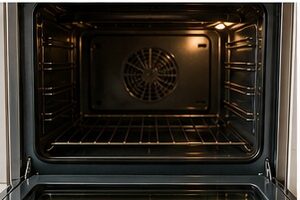
Two ovens, two results that are sometimes different for the same recipe. Browner gratin here, slower cooking there. The difference is often due to a single technical detail: the presence or absence of a fan that circulates hot air.
Convection oven (convection heat) and conventional oven (static heat) rely on two different ways of distributing heat, which has concrete consequences on cooking.
Table of Contents

Here's how each type of oven works, their respective benefits, and how to adapt a recipe from one to the other.
The classic oven, static heat
In a traditional oven, heat comes from resistances located at the top and bottom of the cavity, without forced ventilation. The hot airRises naturally, which creates temperature differences between the top and bottom of the oven, and between the center and the edges. This is the mode generally recommended for delicate pastries, such as souffles or certain cakes, which may react poorly to too much airflow.
The convection oven, heat in motion
The convection oven adds afan, generally associated with a circular resistorat the back of the cavity, which stirs hot air continuously. This airflow makes the temperature much more consistent throughout the oven, reduces the differences between the various grate levels, and generally speeds up cooking.
This mode is particularly suitable for cooking several dishes at the same time, on several levels, as well as for preparations that benefit from surface drying, such as pastries, roasts or roasted vegetables, whose surface becomes crispier.
How to adapt a recipe between the two modes
The airflow of a convection oven accelerates heat exchange, which means that a recipe designed for a conventional oven generally cooks more quickly, or requires a slightly lower temperature, with convection. A common rule is to reduce the temperature by about 10 to 20°C, or to shorten the cooking time by about 10 to 20%, while monitoring the cooking rather than applying a fixed rule, as the differences vary between ovens.
Our tips
►Use static heat for delicate pastries
Souffles, sponge cakes, and some cakes often rise better without direct airflow.
►Use convection for several dishes at the same time
The homogeneous heat allows cooking on several levels without having to switch dishes during cooking.
►Lower the temperature slightly in convection mode
Reducing by 10 to 20°C compared to a recipe designed for a conventional oven limits the risk of overcooking.
Static heat or convection heat are not really opposed: each has its strengths depending on the type of dish prepared and the number of levels used.
You can also read:Whether you can turn off a self-cleaning oven during the cycleandThe cooking methods that best preserve nutrients.
Do not hesitate to leave a comment!
For more information and to receive our news, follow us on social networks!
Comments on Convection oven or conventional oven: what is the difference?