The 7 Best Ways to Add Flavor to Your Food Without Forcing on Salt
by Karine Lemoine
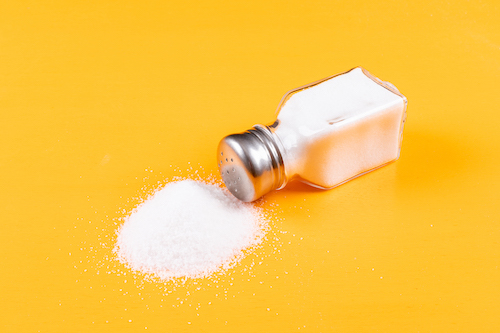
We put it everywhere in our dishes and even when we don't use it, it is always present in ourpoweringwithout us even knowing it sometimes: it's salt.
One can experience preparing a dish without salt or with it. Evidently,Cooking without salt is bland.
Undoubtedly, salt is a real flavor enhancer and appears to be an indispensable ingredient in cooking.
In all recipes, salt is always included in the list of ingredients.
Sommaire
- What is salt made of?
- Where does the salt come from to season our dishes?
- How do we get the table salt we find on our plates?
- Salt harvesting and its various forms
- The different types of salt
- Is salt useful in our diet?
- How much salt should we consume?
- Does salt have an impact on our health?
- How can you be in excess of salt?
- 4 actions that will have an immediate impact on your salt intake
- 7 tips to add flavor to your dishes without using too much salt
- FAQ
In any case, we consume way too much!9 to 12 grams on average per day according to WHO figures, the World Health Organization.
The quantity does not seem that huge at first glance except that our body just needs half as much.
So how can we reduce our salt intake? Is there a way to get rid of salt? Which salt should you choose?
We put our two cents in this much appreciated condiment and we tell you everything, let's go!
In this article, we sharethe 7 best ways to add flavor to your dishes without using too much salt.
What is salt made of?
Salt isA condiment also called sodium chloridewhich contains an average of 77% sodium chloride, 16% magnesium, 4% calcium and 2% potassium.
Where does the salt come from to season our dishes?
Salt is naturallycontained in sea water. Salt from the sea is exploited but there are alsosalts from underground mines.
We have the last French salt mine in Varangéville in Lorraine. Salt from underground mines is called rock salt.
Rock saltis a mineral deposit containing a high concentration of edible salt. These salt deposits were formed by the ancient evaporation of lakes or inland seas.
In France, salt is exploited insalt marsheson the Mediterranean and Atlantic coastlines.
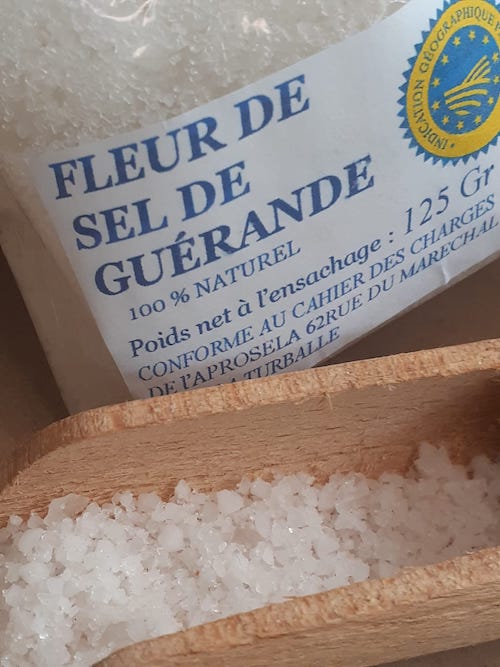
It produces Camargue salt or Guérande salt, the two most famous salts. The latter are also obtained by artisanal processes, worked by hand, as in the past.
Otherwise, the vast majority of salt is produced industrially using machines and in huge quantities.
How do we get the table salt we find on our plates?
We manage to concentrate the salt so that itcrystallizes with the heat of the water and the wind.
It is a physical phenomenon calledEvaporation. When water evaporates, minerals crystallize.
You can easily experience it for yourself. If you heat seawater in a saucepan, the water will gradually evaporate to let a white crystallized deposit, salt, appear.
Salt harvesting and its various forms
Salt comes in 4 different forms:
- gray salt
- Coarse-salt
- refined salt
- The fleur de sel
The gray salt: Grey salt is said to be unrefined, it is natural. It is the trace elements that give this gray color, it is the deposit of salt mixed with clay that is found in the soil in contact with salt.
Fleur de sel: Fleur de sel is a natural white colorLie, it is the thin layer of salt that is gathered from the surface as a result of salt crystallization. We love it for its texture and its crunchy side.
Refined fine salt: Refined fine salt is white in color and it is the one that we mostly find at the table. Refining is an industrial process that allows salt to be bleached, ground and transformed into powder. Adjuvants, anti-caking agents and fluorinated or iodized compounds are usually added to it.
Refined coarse salt: Refined coarse salt has also undergone the refining process, it is the one used to salt in cooking, for brines or used in salt mills.
Natural salt is not refined and still contains all its natural minerals, most of which are sodium chloride, but also magnesium, calcium and potassium.
Natural salts therefore have different taste properties and appearance depending on the quantity of minerals they contain.
Thus, fleur de sel or sea salt harvested by hand have a unique flavor that changes from one region to another.
The different types of salt
Salt is found in France but also in the 4 countries of the world and there are different varieties.
Salt is not always white. There are other varieties of salt and some even colored ones.
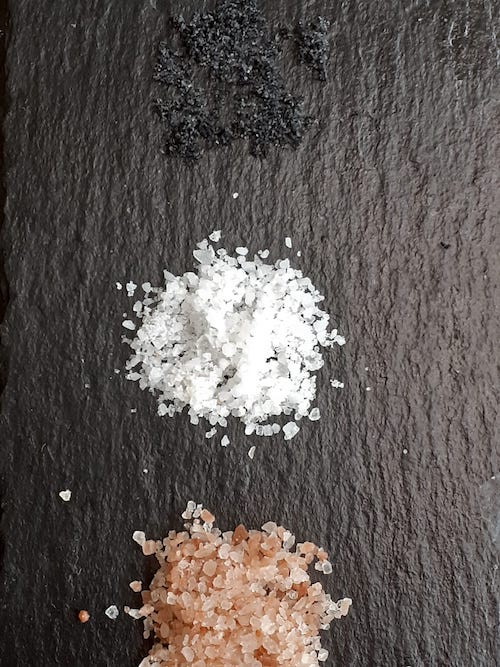 In France,Camargue salt is pinkin a natural way. No additives are added. The color is due to an algae that develops in the salt flats and which gives it its pink color.
Thengray salt,Suitable for consumption is a salt without treatment with cemented clay which gives the greyish side. Mostly made up of sodium chloride but it also contains magnesium, calcium and potassium.
In Pakistani mines, we findHimalayan salt,A pink rock saltof course, which is now easily marketed in Europe at an affordable price. Fine and soft, it owes its color to its iron content.
There is alsoA black salt, for example,Cyprus saltwhich is loaded with sulfur, ideal for recalling the smell of eggs in vegan cuisine..
Also,red saltis harvested in Hawaii. The volcanic clay that rolls down the slopes during the rainy season ends up in the sea, which colors the salt red and gives it a nutty taste.
Persian blue saltis a rock salt extracted from mines in the province of Semnan in Iran. It owes its bluish reflections to the presence of sylvinite, a compound similar to potassium. As for it, it arouses curiosity in the absence of an indisputable adherence. It has an aftertaste of spices and lemon.
Is salt useful in our diet?
We need salt for our body, it's vital because we don't know how to make it.
It is an essential mineral for our existence, we cannot live without salt. You really need it to regulate water in the body otherwise you become dehydrated.
How much salt should we consume?
Salt is essential for the proper functioning of the body but in excess, it turns out to be a real poison for our health.
According to the WHO, the World Health Organization, we consume 9 to 12 grams of salt per day. A figure that far exceeds the intakes that our body needs in fact, since the recommendation is to consume 5 grams per day and per person.
To give us an idea of the quantity to be absorbed, 5 grams is equivalent to the capacity of &rsWhat; a teaspoon.
Does salt have an impact on our health?

We now know thatOverconsumption of saltis linked to diseases such ashypertension or cardiovascular disease. The quantity of salt consumed therefore has a real impact on our health.
But it's not that easy when talking about a few grams! The proportions may remain paltry for some.
However, when we accumulate salt on our plates throughout the day, we notice that the quantities are quickly exceeded.
As a result, it is not so easy to become aware of our overconsumption and to undertake to reduce our quantities of salt! Even more so when salt is hidden in foods where you don't expect it.
“Most people don't know how much sodium they are consuming, or the risks of consuming it,” said Dr Tedros Adhanom Ghebreyesus, Director-General of WHO.
How can you be in excess of salt?
We're not just talking about the pinch of salt added when cooking or at the table, but about the salt hidden in the ready-to-heat products on sale in stores.
80% of our salt intake is not only found in our salt shakers but also in prepared meals and processed products.
So the worst of the worst is the hidden salt that we don't necessarily see and that we really have trouble quantifying.
In addition to hidden salt and the salt we use to season our dishes, there are also naturally salty foods.
Some concrete examples to realize the importance of reducing salt in our diet:
| Here is a comprehensive list of foods that contain 1 gram of salt |
| A slice of sausage |
| 1 handful of chips |
| 4 slices of bread |
| 1 slice of pizza |
| 1 bowl of soup |
4 actions that will have an immediate impact on your salt intake
►Limit salt
-Limit the purchase of highly salty processed products.
►Dose the salt welland don't overdo it.
►Replace itquite simply and we will see below the 7 best ways to give flavor to your dishes without forcing on salt.
►Change your habits
• We remove the salt shaker when eating at the table, it saves us from being solicited.
• You choose to taste before adding salt without knowing if the dish is already salty enough or not.
• Adding salt at the start of cooking gives it time to migrate into pieces of food, seasoning them throughout. Meanwhile, if you add salt only at the end, it provides a more concentrated surface coating that immediately hits your tongue.
7 tips to add flavor to your dishes without using too much salt
- Use salt without sodium, that exists 99% of sodium is replaced by potassium.
This makes it possible to maintain the taste of salt without encountering complications.
Attention, for people with kidney failure, it is contraindicated. You must talk to your doctor before doing anything.
However, potassium salt has a strong, pronounced and bitter taste. It is best to add salt during cooking or in simmered dishes. It helps to limit the &n effect.bsp; sodium negative.
- A good alternative areCondiment basesof potassium with the addition of vegetables, seaweed and herbs. Vegetables increase flavor. It is a very good alternative.
- Marinades can also be a goodMeans for condimentinga food without the addition of salt.
- Cooking in foil and simmered dishes also develop the flavors of slow-cooked foods and make it possible to cook without salt.
- Make your own vegetable/spice broth.
- Using foods that are already salty naturally to season is a real solution.
- Use foods or drinks that provide a real pronounced taste, an aromatic note that is both complex and fresh.
Choose red wines, white wines, beer or even cider.
In addition to being enjoyed by the glass, wine can easily be used in cooking and provides undeniable taste qualities.
Salt is also used for other things
Meat or fish are cooked in a salt crust. The salt crust (dough + salt) allows the food to be stewed.
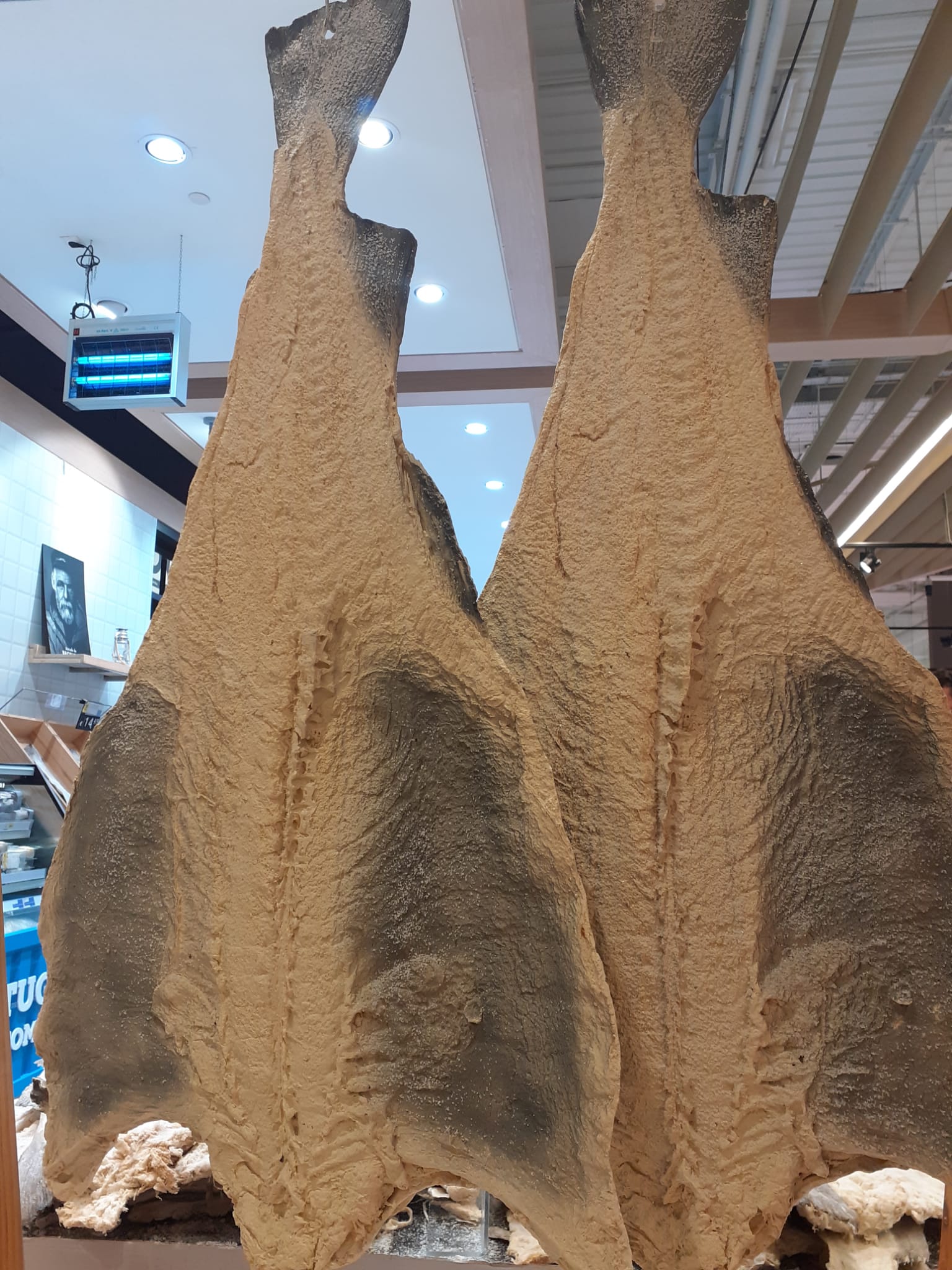
Salt allows food to be preserved because it absorbs water. In the past, it was the main way to preserve meat and fish.
Currently, this process is still used. It can be found for salting cod or ham such as Bayonne ham.
Salt also preserves butter and cheeses.
Salt is a condiment that we cannot do without, however, with a little culinary imagination and by drawing our inspiration from other foods or drinks such as spices, oils and alcohols, we can succeed in doing wonders in the kitchen with taste without forcing on salt.
Do not hesitate to leave a comment!
For more information and to receive our news, follow us on social networks!
Image source: freepik-home cooking
FAQ
Are there additives in Camargue salt?
Pink Camargue salt, of controlled designation, does not contain additives, it is 100% natural. It obtains its color naturally thanks to an algae.
Which salt is better for your health?
When we talk about comparison, salts have different concentrations of sodium chloride and other minerals, which can give them different taste powers. As far as health benefits are concerned, salt remains essential to the body in small doses since it provides us with the needs of sodium chloride useful for the proper functioning of the body.
I can't eat salt, what can I replace it with?
We share 7 ways to replace salt in your diet in our article. If you can't eat salt for health reasons, it's entirely possible to replace it by adopting new habits.
What processed products contain salt?
The food groups that contribute the most to sodium intake in the diet are breads and rusks, charcuterie, mixed dishes (all categories combined), cheeses, snack foods and fast foods, and condiments and sauces as well.
How do I prevent salt from compacting in my salt shaker?
It is usual to put a fewraw rice grainsin the salt shaker to absorb moisture when anti-caking agents are not effective enough.
Comments on The 7 Best Ways to Add Flavor to Your Food Without Forcing on Salt