How do you maintain an enamelled cast iron casserole (Dutch Oven)?
by Karine Lemoine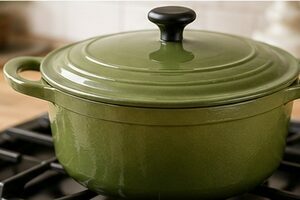
An enamelled cast iron casserole, also called a Dutch Oven, accompanies cooking for decades if it is well maintained. Unlike pig iron, it does not need to be cooked, but there are a few simple rules to preserve its enamel and cooking capacity.
Heat, cooling, washing: every step counts to avoid thermal shocks and scratches that damage the surface over time.
Table of Contents
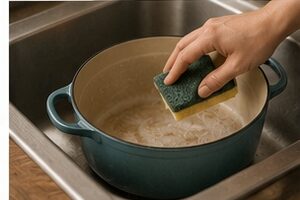
Here's how to clean an enamelled cast iron casserole after each use, and how to keep it in good condition for the long term.
Cleaning after cooking
The casserole should always be allowed to cool completely before washing.Thermal shock, such as running cold water over cast iron that is still hot, can crack enamel, including on good quality models. Once lukewarm, washing in hot soapy water with a non-abrasive sponge is sufficient in most cases.
For stuck food residues, let the casserole soak for a few hours, or even overnight, before scrubbing. A baking soda paste applied to stubborn stains and left on for about twenty minutes greatly facilitates peeling, without using an abrasive product.
What to avoid on enamel
Do not use steel wool, hard scouring sponges and powdered abrasive products: they scratch the enamel on the surface, making it more porous and more sensitive to stains and the adhesion of food later on. A simple soft sponge or a soft dish brush is sufficient.
It's also best to avoid sharp metal utensils that scrape the bottom, as well as cooking on an empty or very high heat for a long time, which can tarnish or crack the enamel over time. The dishwasher is tolerated by some manufacturers, but washing by hand is still recommended to maintain the shine over time.
Drying and sensitive areas
After washing, it is important to dry the casserole thoroughly, including the edge of the lid and, on some models, the outer underside, which is still unenamelled pig iron. These unprotected areas can rust if they stay wet. A slight passage of neutral oil on these unenamelled parts, once or twice a year, helps to protect them.
The lid deserves the same attention as the tank: grease splashes also accumulate there and can tarnish the interior enamel if they are not cleaned regularly.
Our tips
►Let it soak before scrubbing
Instead of forcing on an encrusted stain right out of the oven, fill the casserole with hot water and let it work for one to several hours. The residue then comes off almost by itself, without effort or scratches.
►Use baking soda instead of abrasive
For stubborn white or brown stains, a paste of baking soda and water applied directly to the area, left on and then rubbed with a soft sponge, gets rid of most marks without damaging the enamel.
►Always dry unglazed parts
On models where the outer bottom is still cast iron, immediate drying after washing prevents the appearance of rust. A light film of oil applied from time to time extends the protection.
With proper care, an enamelled cast iron casserole goes through the years without losing its cooking qualities: the main thing is to avoid thermal shock and abrasive products.
You can also read:How to take care of your cast iron casseroleandThe compatibility of cast iron with a ceramic stovetop.
Do not hesitate to leave a comment!
For more information and to receive our news, follow us on social networks!
Comments on How do you maintain an enamelled cast iron casserole (Dutch Oven)?