outdated
by Karine Lemoine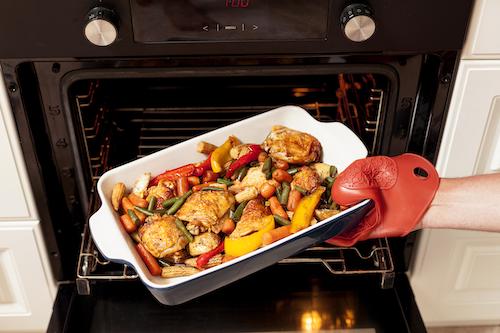
Sommaire
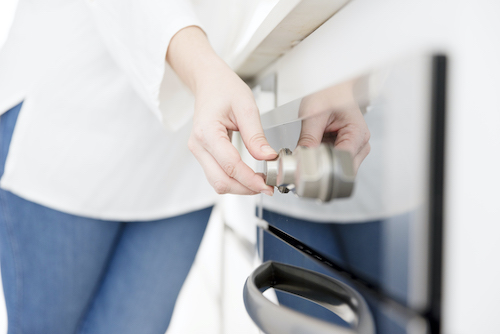
Even if our oven has several cooking functions, we have an annoying habit of always positioning ourselves on the same function!
When you receive guests or cook food for the family, you tend to turn on the mode”Circulating heat” thinking that it's the most convenient way not to bother. Maybe it has already happened to you?
However, sometimes the result of our preparation is not always there.
Cooking your dish in the oven is sometimes a test of improvisation. You get in the oven, you press the button, you really believe in it, without knowing what to expect in terms of results.
We have all had the experience of taking a pie out of the oven that had not finished cooking on the bottom, or of serving dry or even charred meat to the table.
So having a good oven to cook at home, yes okay, but knowing how your oven works is even better!
Are you interested in getting practical information on how to go aboutroast in the oven, grill meats or vegetables, bake bread or make delicious pies?
In this article, we share tips foravoid missing your preparations when cooking in the oven.
The appearance of the electric oven

Until the years 1940,The cook(we are talking here about the cooking appliance) still had its place in the kitchen. It was afireplace, powered by wood or charcoal, which heated the stovetops and the oven.
The cook was alsoA heating mediumin the living room of the house. The stove still exists in some homes, but it is becoming rarer.
As early as the 1940s,The gas stove or also called gas cookeris becoming widespread and making life easier for the housewife. No need to keep the charcoal stove onWe turn the gas on and off. You slow down or increase the heat by monitoring the cooking of the dishes alternately.
Then the electric one appeared in stride withnatural convection.
Gas or electric ovens and stovetops are revolutionizing cooking. The housewife is changing her habits.
The aim is to get a meal cooked more accurately without requiring a lot of attention.
The different types of oven
Various types of ovens can be found in appliance stores. And when you want to equip your kitchen with a new oven it is sometimes difficult to find your way around.
Here are the different ovens that you will find on the market:
- The gas oven
- The microwave oven
- The classic electric oven with natural convection
- The convection oven
- The forced air oven
THE GAS OVEN OR GAS STOVE
The heat of the gas oven isstatic heat above and below. We can find a grill option. The downside is that the gas cooker does not heat up evenly. It may burn in some places. It is good enough forbasic preparationslike gratins. It requires a lot of attention to adjust the temperature, raise it or lower it.
THE MICROWAVE OVEN
The fFor microwaveheats and thawsvery quickly. It is equipped with an electronic tube called a magnetron whichProduces microwaves from electricity. These microwaves pass through materials such as glass, paper, porcelain, and plastic and are transformed into heat when they come into contact with the molecules in the product. They cause the water molecules in food to rotate so quickly that they vibrate, create friction and heat. Microwaves don't fully cook food. They penetrate the surface and diffuse over a maximum of five centimeters.Heat is communicated to the rest of the food by conduction.
There is also the 2 in 1 oven:Microwaves/Oven
The microwave can also be combined with the traditional oven, which combines the 2 types of cooking in one appliance. This type of ovensuitable when there is a lack of space in the kitchenbut it's still an extra oven for basic cooking of your dishes.
THE NATURAL CONVECTION OVEN
The natural convection electric oven is the traditional oven, with heat that is distributed at the level of the roof and heat at the level of the oven floor (the oven floor).The heat is propagated thanks to integrated electrical resistances.
THE CIRCULATING HEAT OVEN
The convection oven hasnatural convectionintegrated to which is addeda fan on the wall at the bottom of the oven that will stir the hot aircoming from the electrical resistances of the roof and the sole.We also talk about brewed heat.. Cooking is thus obtained withmore homogeneous heat.
THE FORCED AIR OVEN
The forced air ovenhas a circular resistor in addition to the fanlocated on the bottom wall of the oven. The forced air will circulate the air around the food for theCook quickly and regularly.
The electric oven, thanks to its advanced technologies, will offer different cooking modes. In this way, you can select the mode according to and adapt to each dish you are going to prepare.
The advantage of having an electric oven is that you gain in temperature accuracy because it allows you to obtain constant heat, maintain it and raise or lower the temperature using a thermostat.
To use your oven optimally, you must therefore understand how it works.
What type of oven do you have? Gas oven, natural convection, convection, or forced air?
Below we will list everything that can be done with an oven.
Functions and cooking modes to select for your dishes
With an electric oven, today, virtually all cooking functions are possible, or almost all:
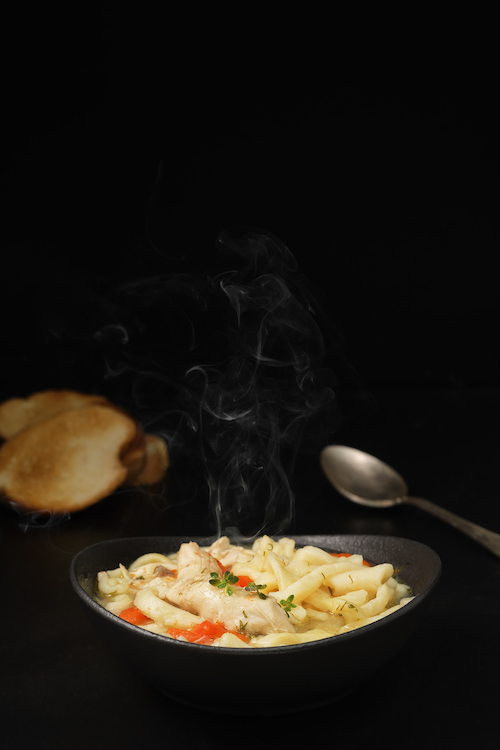
►We can warm uphis dish prepared in advance for the evening when coming home from work or, once the small family gathered around the table to eat.
►We can defrostfoods. The defrosting time will depend on the nature and quantity of the food.
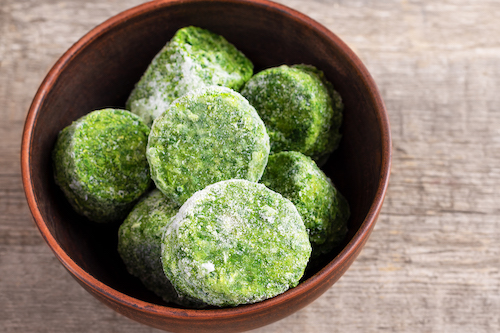
If you have the forced air or defrosting function, it's better if not, you just have to choose the convection heat because it will have the function of dehydrating the food.
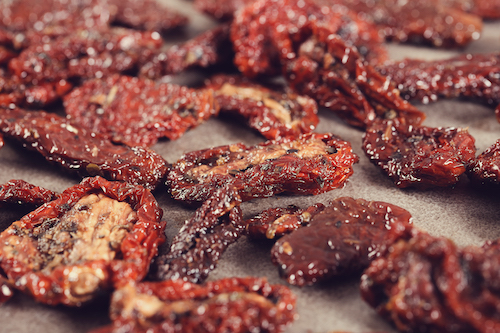
►Dehydrationis entirely possible in a conventional oven if you don't have a dehydrator.
►Roast
.jpg)
Roast, well, when it's dry it's grated! So convection and forced air will speed up cooking but it can also dry out your roast. Natural convection will cook the roast irregularly.
If you opt for natural convection mode, pre-cut the meat halfway through cooking to soak it in its juices, a tip I got from my mom. She always prepares her fillet of beef for us this way when we get together with the family. The meat is so tender and tasty, a real treat!
If the roast is overcooked and the outside is burnt in places, check the temperature again!
If the roast looks good but the sauce is burnt, choose a smaller dish and make sure there is still juice!
Natural convection is also suitable for lean pieces of beef, veal and game meat. In natural convection, the meat will be seared below and above, the meat will be well grilled and soft inside.
►Grilling

The grill function is possible on all ovens. Attention, cooking is very fast and requires supervision!
The entire surface under the resistance of the upper grill is heated. You can grill multiple steaks, sausages, fish, or toast.
For even cooking, make sure that the pieces of meat are the same thickness.
►Simmer or cook at low temperature or slow cook
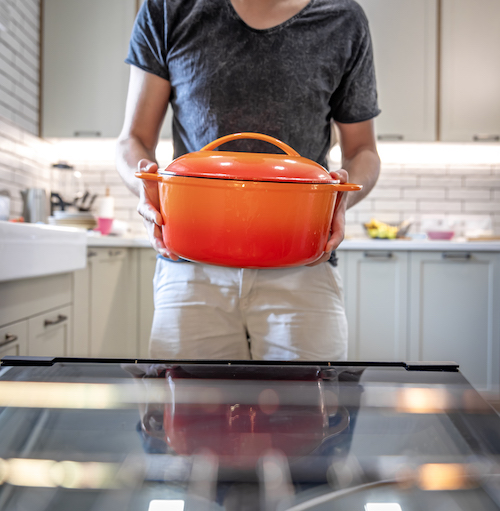
Simmering in the oven is very easy! In natural convection, convection or forced air mode, the cast iron casserole with its lid remains the ideal receptacle for maintaining all the humidity in the casserole and obtaining tender and tasty meat. Put the temperature in slow cooking mode, 120 to 130 degrees, you forget your preparation and a few hours later, your preparation is transformed; and a wonderfully delicious dish!
In this case, it is the cast iron material perfectly adapted to the oven that will allow the food to be cooked evenly and keep all the heat.
►Bake delicious pastries
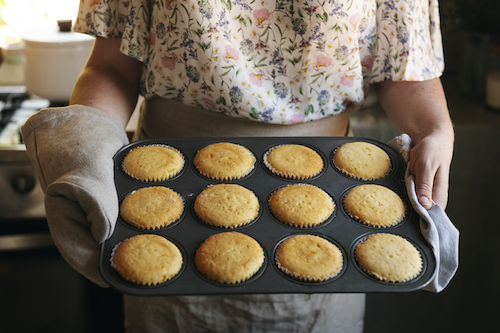
Shortcrust pastry or puff pastry with the natural convection oven is ideal, the puff pastry will rise very quickly.
If you're baking cake on one level, use natural convection instead.
Yeast-dough cakes, baked in a mold and soufflé are the best with this natural convection cooking method.
If your cake collapses, make sure that the dough is less liquid or reduce the oven temperature by 10 degrees. Respect the mixing times indicated in the recipe.
If your cake has risen more in the center than at the edges, do not grease around the removable pan. After cooking, carefully unmold the cake using a knife.
If your cake is too dry, increase the temperature by 10 degrees instead and reduce baking times.
►Bake your homemade bread
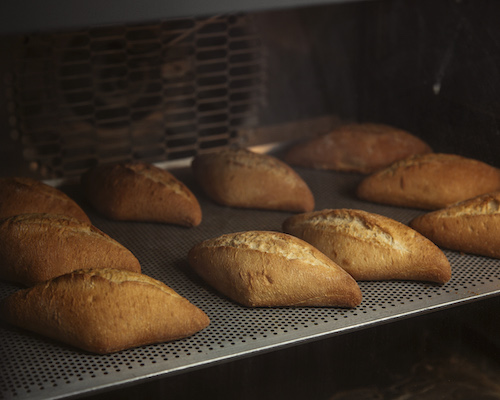
The natural convection mode with steaming is ideal for baking bread, but not everyone necessarily has the option integrated into their oven. Here too, the heat is distributed uniformly onto the cake through the roof and the bottom of the oven. The moisture that is extracted from the cake during cooking remains in the oven in the form of water vapor. The pastry does not dry out.
Yeast pastries, such as bread, rolls or yeast dough braid, are therefore particularly successful. This cooking method is also ideal for puff pastry.
In case you do not have this function, the way to recreate this humidity condition is the casserole. You put the bread into the casserole with the lid closed and your bread will be very soft and crunchy. A few minutes before the end of cooking, you can remove the lid to give color to your homemade bread.
Another method to maintain humidity in your oven, before cooking, place water in the grill pan that you will place at level 1!
Two more practical ways to use the oven
I also use the oven forSterilize and make my bread dough riseespecially in winter.
WAY NO. 1: I sterilize my jars quite easily and quickly with the oven. Simply set the temperature to 100 degrees for 20 minutes. Make sure your jars are clean and dry first.
WAY NO. 2: It is very practical to raise your dough in the oven, especially in winter when the ambient temperature is rather insufficient to promote the rise of the dough. Simply turn on the oven at the lowest temperature and then turn it off so the dough is ready to rest at the right temperature.
Preheating the oven
• Natural convection will require 15 minutes of preheating the oven so that the walls are hot and cooking can take place.
• Circulating heat will require 6 minutes of preheatingHeating, the temperature rises more quickly.
• Pulsed heat does not require any preheating, which is a big advantage! Cooking the dish can be started directly in the cold. Be careful to take this less time into account in your recipes!
Cleaning the oven
For the hygiene and longevity of your device, clean it regularly or even gradually to remove dirt more easily.
We also avoid leaving burnt remains that will give an unpleasant charred smell to your current preparation.
An indispensable tool for cooking in the oven

The cooking probeis an essential tool to have in the kitchen to avoid missing the cooking of your meats with the oven cooking mode.
We can find ovens with the integrated probe that can be plugged directly into the oven and that will alert us when the temperature is reached but you can also have an external probe that will do the trick.
There you go, the electric oven has no more secrets for you.Cooking in an electric oven allows us to obtain cooking temperatures that are more precise than cooking with a gas oven.That's for sure but that doesn't mean you have to let the oven work alone.
Even if technology has greatly improved our cooking habits and our daily lives, that's not everything. Cooking at home takes a bit of time. It takes a pinch of patience and a dose of best practices! Sometimes wanting to go quickly by shortening cooking times or increasing the temperature doesn't always work.
A minimum of well-adapted programmingis required to obtaina successful result of your preparationand in an effective manner.
The time you will take to program will be less time catching up with burnt dishes.
Follow our practical information to succeed with your meats, your homemade breads or your pies in complete peace of mind!
Everyone in the kitchen! Do not hesitate to leave a comment or to share one of your baked dishes.
Bon appetit!
Also to be read:
How to Bake Potatoes in the Oven in 20 minutes
FAQ
Are convection heat and stirred heat the same thing?
Circulating heat includes mixed heat and forced heat. The difference is that circulated heat works with a fan that moves the air and forced heat, on the other hand, has a third heat point circulating around the fan.
Why aren't my pastries evenly browned?
For consistent pastries, select a slightly lower temperature. Cook delicate pastries on one level using natural convection cooking mode.
What is the purpose of a drip pan?
Lechefrite can be used to prepare fondant cakes, pastries, reheat frozen dishes and large roasts. It can also be used to recover fat if you place grilled food directly on the grill.
Why is the top of the cake overcooked?
We recommend choosing a lower temperature and baking the cake a bit longer. This will result in a cake that is baked more evenly.
Do not hesitate to leave a comment!
For more information and to receive our news, follow us on social networks!
Image source: frEepik
Comments on outdated