Coffee, espresso, cappuccino, latte, macchiato: what are the differences?
by Karine Lemoine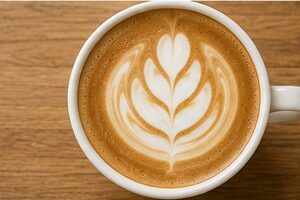
Between the filter coffee in the morning and the numerous drinks offered in coffee shops, it is not always easy to know what really sets an espresso apart from a cappuccino or a latte.
These drinks share the same base, coffee, but differ in the method of extraction, the quantity of milk and the proportion of foam.
Table of Contents
Here's a clear guide to understanding what makes filter coffee, espresso, cappuccino, latte, and macchiato different.
Filter coffee, the simplest base
Filter coffee, or classic coffee, is obtained by passing hot water through ground coffee without pressure.This method produces coffee that is lighter in the mouth and is generally served in larger quantities than espresso, in a cup or mug.
Its taste is less concentrated and intense, with a milder bitterness, which is why it is often drunk in large quantities, especially at breakfast. It is the basis for many daily consumption habits, especially in France and in Anglo-Saxon countries.
Espresso, the concentrated base for all other drinks
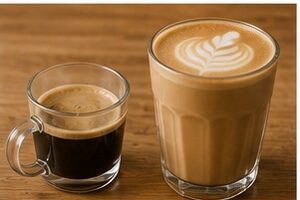
Espresso is obtained by passing hot water under strong pressure through very fine ground coffee in a very short time, generally around twenty seconds.The result is a concentrated coffee, about 25 to 30 ml, topped with a fine golden foam called crema.
Its taste is intense and full-bodied, with less bitterness than over-brewed filter coffee, because the contact time with water is very short. Espresso is the basis for all of the following drinks: cappuccino, latte and macchiato are basically just variations around this same base to which milk is added in different proportions.
Cappuccino, the balance between coffee, milk and foam
The traditional cappuccino consists of espresso, hot milk, and milk foam, in roughly equal proportions, about a third of each.It is this significant proportion of foam, thick and creamy, that distinguishes cappuccino from other milk-based drinks.
The taste of coffee is still present, as the amount of milk added is relatively moderate compared to a latte. It is traditionally served in a medium-sized cup and sometimes sprinkled with cocoa or cinnamon.
The latte, more milk and less foam
Caffè latte (often simply called a “latte”) replaces much of the volume with hot milk, with only a thin layer of foam on the surface.The proportion of coffee is therefore lower than in a cappuccino, which results in a softer and creamier drink, with a less pronounced coffee taste.
It's usually served in a tall glass or mug, making it the largest drink on this list. It is also the one that is best suited to adding flavored syrups, especially vanilla or caramel, because of its large volume of milk.
Macchiato, an espresso barely “stained” with milk
Espresso macchiato, an Italian term meaning “stained”, refers to an espresso to which only a small touch of milk or foam is added, barely a spoon.It is the closest drink to pure espresso on this list, with a very small total volume and a very pronounced coffee taste.
It should not be confused with latte macchiato, which completely inverts the proportions: this time it is a large glass of hot milk “stained” by a little bit of espresso poured gently on top, resulting in a drink that is much milder and much less full-bodied than the classic macchiato, despite having a very similar name.
Our tips
►Rely on the proportion of milk rather than the name
The names of these drinks sometimes vary from establishment to establishment. When in doubt, ask for the proportion of milk and foam used: this is the most reliable guide to know what to expect.
►Choose according to the desired coffee strength
For a pronounced coffee taste, choose espresso or macchiato. For a milder and longer drink, a latte is the most suitable choice.
►Do not confuse macchiato and latte macchiato
These two drinks have the opposite proportions despite having an almost identical name. Always check the composition if you are not sure what you order.
All of these drinks start from the same base, espresso, and differ only in the amount of milk and foam added.
You can also read:Whether flavored coffee contains caloriesandHow to keep coffee grounds fresh longer.
Do not hesitate to leave a comment!
For more information and to receive our news, follow us on social networks!
Comments on Coffee, espresso, cappuccino, latte, macchiato: what are the differences?