An important question: how much protein does 170g of salmon contain?
by Karine Lemoine
Do you like to eat salmon and want to know how much protein is in 170g of salmon? If this is the case, rest assured that you will receive a satisfactory response.
Salmon is a superfood because it contains almost all the essential nutrients, such as proteins and vitamins.Salmon is known for its high protein and omega-3 fatty acid content.
There are six species of salmon, five of which live in the Pacific Ocean and only one in the Atlantic Ocean.
Sommaire
- Is salmon a good source of protein?
- How much protein does 170g of salmon contain?
- Is it good to eat salmon every day?
- How much salmon is too much?
- Why can salmon be bad for you?
- Who shouldn't eat salmon?
- Is salmon good for the heart?
- Is fried salmon good?
- Is canned salmon as healthy as fresh salmon?
- What isWhich is healthier, chicken or salmon?
- What happens if you eat too much salmon?
- Conclusion
Each type of salmon has a slightly different protein value than the other. On average, 170g of salmon contains 34 grams of protein.
Let's learn more about this salmon meat!
Is salmon a good source of protein?
Yes, salmon is a good source of protein. Moreover, it is one of the most protein-rich foods. It is well known and appreciated for its high protein content and low saturated fat content.
Salmon is now cultivated on a large scale and there is a slight difference between the nutritional value of wild salmon and that of farmed salmon.
Thewild salmoncontains a higher level of environmental contaminants, while farmed salmon contains fewer environmental pollutants.
Different salmon species have different protein levels.Here is the protein content of 100 grams of meat from different salmon species:
| Salmon species | Proteins in 100 g of salmon |
|---|---|
| Atlantic salmon | 20 grams |
| Chinook salmon | 26 grams |
| chum salmon | 20 grams |
| Coho salmon | 24 grams |
| Sockeye salmon | 25 grams |
| Pink salmon | 25 grams |
Table: proteins per 100 g of salmon
How much protein does 170g of salmon contain?
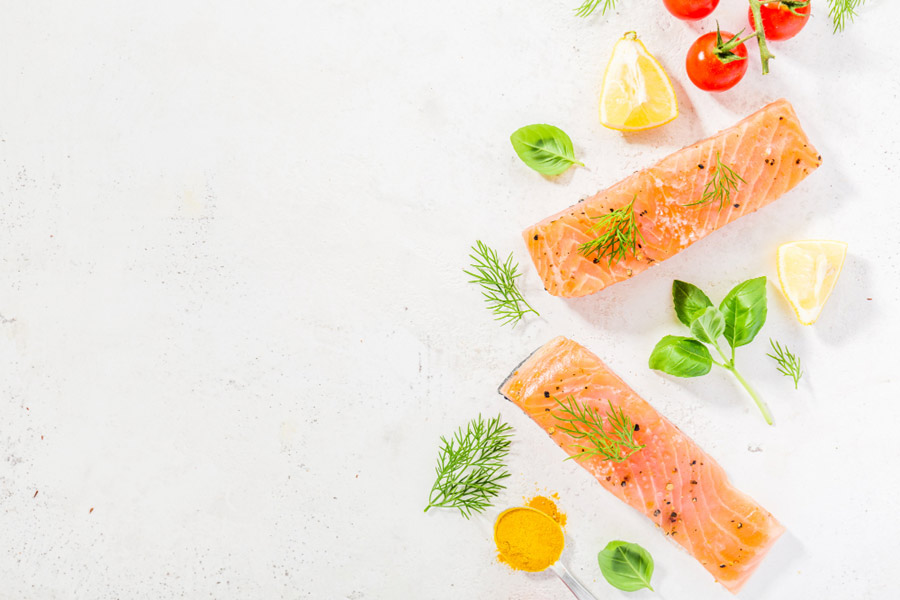
Salmon is renowned for its high quality proteins.The protein content of different types of salmon differs from one another. The protein content of farmed salmon and wild salmon also differs.
On average, 100 grams of raw salmon meat contains 20% protein, but protein density increases in thecooked salmonas liquids escape,and only proteins and other nutrients remain in salmon meat.
The following table shows how much protein is in 170 grams of different salmon species.
| Salmon species | Amount of protein in 170 g |
|---|---|
| Sockeye salmon | 44 grams |
| Pink salmon | 43 grams |
| Coho salmon | 42 grams |
| Atlantic salmon | 34 grams |
| Chinook salmon | 34 grams |
| chum salmon | 34 grams |
Table: Amount of protein in 170g of salmon
Farmed salmon receives a regulated diet and is kept in a controlled environment so that its protein content is relatively constant.But the protein content in wild salmon varies from salmon to salmon.
Is it good to eat salmon every day?
Salmon is one of the few foods that contain allessential nutrients necessary for the proper functioning of the human body. Salmon contains proteinshigh quality sour acids that are necessary for healthy and strong muscles.
In addition, omega-3 is good for the heart and skin and also contains all the essential vitamins.
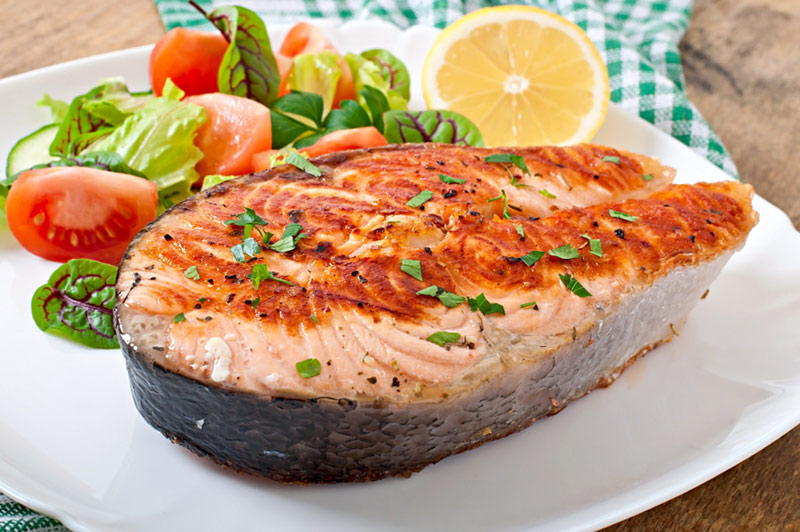 You can eat salmon every day if you are a healthy adult. In addition, eating salmon every day will help us meet our body's nutritional needs.
Salmon has low levels of mercury in the body, so it is safe to eat it regularly.
Farmed salmon and wild salmon are good for our health, they provide the nutrients our bodies need, and they keep us active and healthy.
How much salmon is too much?
Although salmon is an excellent and nutrient-rich food, it also contains mercury in its body, a heavy metal that is harmful to our body.
Although mercury levels in their bodies are low, it can still be dangerous for our bodies if we eat a large amount of salmon on a regular basis.
For an average weight adult, it is not recommended to consume more than 350 g of salmon per day. Eating more than 370 grams per day is too much and can raise mercury in the human body to a dangerous level.
Salmon is a good source of protein and other essential nutrients. You still need to keep track of your salmon intake to avoid mercury poisoning and other health problems associated with excessive seafood consumption.

Why can salmon be bad for you?
Salmon often contain more pollutants than the water they live in. Mercury is also present in their bodies. Especially in farmed salmon, which contains much more mercury and other harmful chemicals.
These contaminants and mercury are harmful to human health.
Salmon contains heavy metals such as mercury and other dangerous contaminants. This is why salmon can be bad for human health.
As the world's water becomes more and more polluted, so does the level of contaminants in salmon meat. In order to avoid illness, you should eat a low amount of salmon.
Who shouldn't eat salmon?
 Seafood is famous for its flavorand their nutritional value, but their problem is that they contain numerous contaminants and heavy metals, including mercury.
Salmon is no different and also contains high amounts of arsenic, PCBs, mercury, and other harmful chemicals.
Therefore, eating salmon can be dangerous for some people.
Young children, pregnant women, women who are breastfeeding young children, the elderly, and people with serious health conditions should avoid eating salmon.
Mercury and other contaminants found in salmon are known to affect the mental and physical condition of children.
Thus, pregnant women and women who are breastfeeding their children should avoid salmon or any other seafood for the safety of their children.
Is salmon good for the heart?
Several nutritionists and experts recommend eating salmon to keep your heart healthy. Salmon contains proteins and omega-3 fatty acids that are beneficial for heart health.
The amount of saturated fatty acids in salmon is low, which is good for heart health because saturated fatty acids interfere with the proper functioning of our heart.
Salmon is good for the heart because it contains omega-3 fatty acids, bwell known for our heart health.
Additionally, omega-3 helps regulate blood pressure, reduce blood clotting, and reduce irregular heartbeats, thereby reducing the risk of heart failure.
Eating 226 grams of salmon per week is enough to provide the human body with the omega-3 fatty acids necessary for the human body.
Is fried salmon good?
Salmon is a healthy food, but the ways in which salmon is cooked can affect its nutritional value.Some cooking methods preserve and increase nutritional valueof salmon, while others decrease or cancel out its nutritional value.
Braised salmon in a tablespoon of cooking oil will be healthy because it contains unsaturated fatty acids.On the other hand, fried salmon in an oil bath is not the best for your health.
The best ways to cook salmon are roasted or braised.
Cooking salmon is quick and easy. Its flavor is delicious. You can add salmon to your meal from time to time so you can enjoy this delicious meat frequently.
Is canned salmon as healthy as fresh salmon?
Most people think canned salmon is less healthy than fresh salmon, but that's not true. Canned salmon is rich in nutrients. Surprisingly, canned salmon contains more calcium and omega-3 fatty acids than fresh salmon.
Most canned salmon is caught in the wild and wild salmon generally has lower mercury levels than farmed salmon.
Yes, canned salmon is as healthy as fresh salmon, and canned salmon contains more calcium and lower levels of mercury.
Canned salmon is cheap, easily available in markets, and can be prepared quickly.
It can be stored for a long time and used when needed. Plus, you can present it on the dining table all year round whenever you want.
What isWhich is healthier, chicken or salmon?
Chicken and salmon are excellent sources of high-quality protein and other elements necessary for the human body. Both are easily available on the market.
But theFish contains omega-3and other healthy fatty acids that chicken lacks. So salmon has a slight advantage.
Salmon is healthier than chicken because it contains more nutrients, especially unsaturated fatty acids and omega-3 fatty acids.
What happens if you eat too much salmon?
Eating salmon is good for your health, but anything in excess is bad. Overeating salmon can therefore also be harmful to your body.
In addition, salmon is rich in nutrients, but at the same time it contains highly toxic pollutants and heavy metals, especially mercury.
Eating too much salmon may possibly increase the concentration of mercury and other harmful substances found in salmon in your body.
Conclusion
In short, nowadays, many people are asking questions about how much protein is in 170 grams of salmon, because they want to know the exact protein content of salmon.
But answering these types of questions is difficult because the protein content in salmon varies from person to person. It is therefore difficult to determine the exact protein volume of 170 grams of salmon.
On average, 170 grams of salmon grown in the Atlantic contain about 34 grams of protein. Salmon is one of the best foods available to us.
It's cheap and easily availableblue, but like everything, it also has some drawbacks.
The benefits of eating salmon far outweigh the disadvantages. Nevertheless, you should not eat an excessive amount of salmon, as this can increase the levels of pollutants and mercury in your body.
Comments on An important question: how much protein does 170g of salmon contain?